
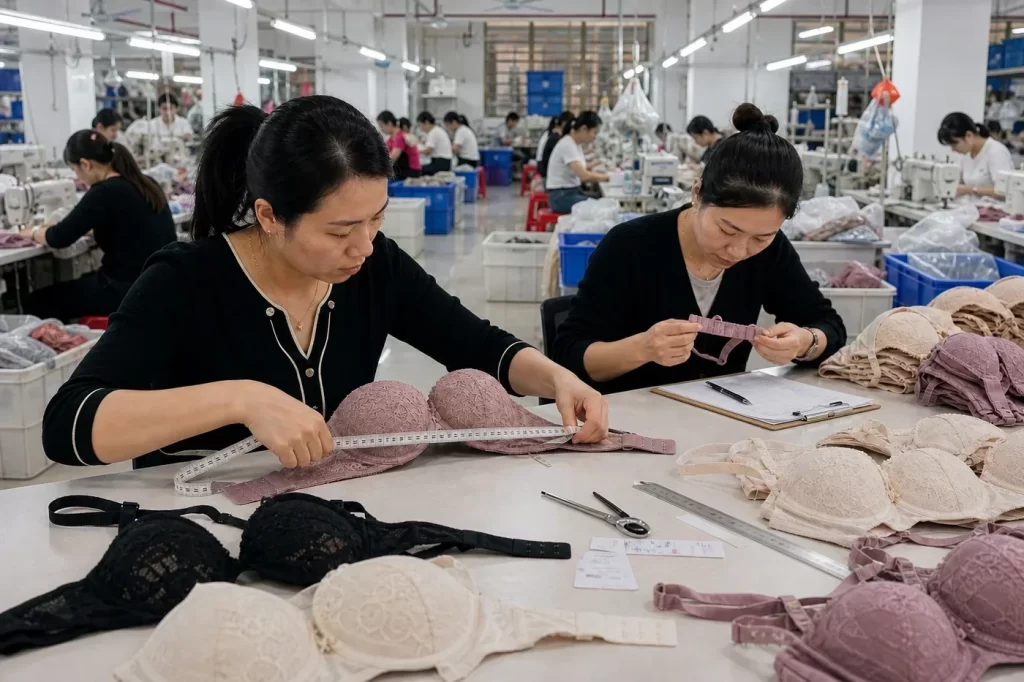
Bra quality control is not a final checkpoint. By the time a defect reaches the packing table, the cost of fixing it has already been paid three times: in fabric, in labour and in the delay. That is why our production process uses four inspection stages, each catching a different type of problem.
This article explains exactly what we check, how defects are classified, and how a wholesale buyer can verify quality before a shipment leaves China.
Why Quality Control In Lingerie Is Different
A bra has more components than almost any other garment: fabric, lace, foam cups, underwire, elastic straps, hooks, sliders, rings, labels and thread. A small failure in any one of them can make the whole product unsellable. A strap that loses elasticity or a hook that pulls out is not a cosmetic defect; it is a return.
Lingerie QC therefore has to check both appearance and function, and it has to happen before packing, not after.
Stage 1: Fabric Inspection
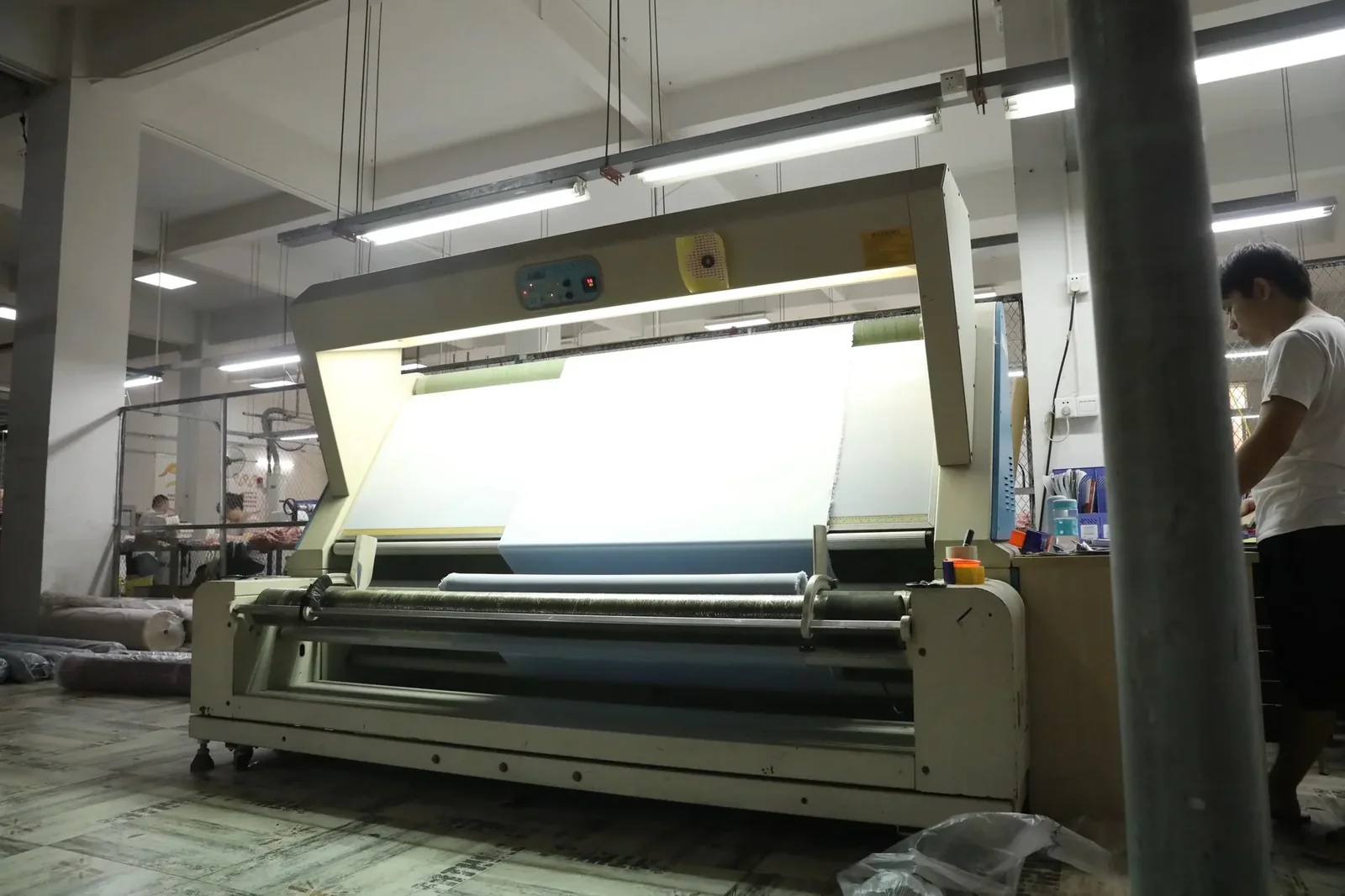
Fabric is inspected when it arrives at the factory, before cutting. This is the cheapest place to catch a problem, because no labour has been added yet.
We check:
- Shade consistency across rolls
- Holes, stains and weaving defects
- Width and weight (GSM) against the approved specification
- Stretch and recovery
- Lace pattern edges and repeat alignment
- Foam density and surface quality
Any roll that fails is separated and reported to the fabric supplier before production begins.
Stage 2: In-Line Inspection
In-line inspection happens during sewing, not after it. Each production line has a supervisor who checks work in progress at key operations, especially cup seaming, underband attachment and strap joining.
This stage catches construction problems while they are still easy to correct. If a cup seam is misaligned, it is better to find it on the tenth piece than on the three-hundredth.
We check:
- Cup symmetry and seam alignment
- Underwire position and casing
- Strap attachment strength
- Underband tension
- Stitch density and loose threads
- Hook-and-eye alignment
Stage 3: Final Inspection
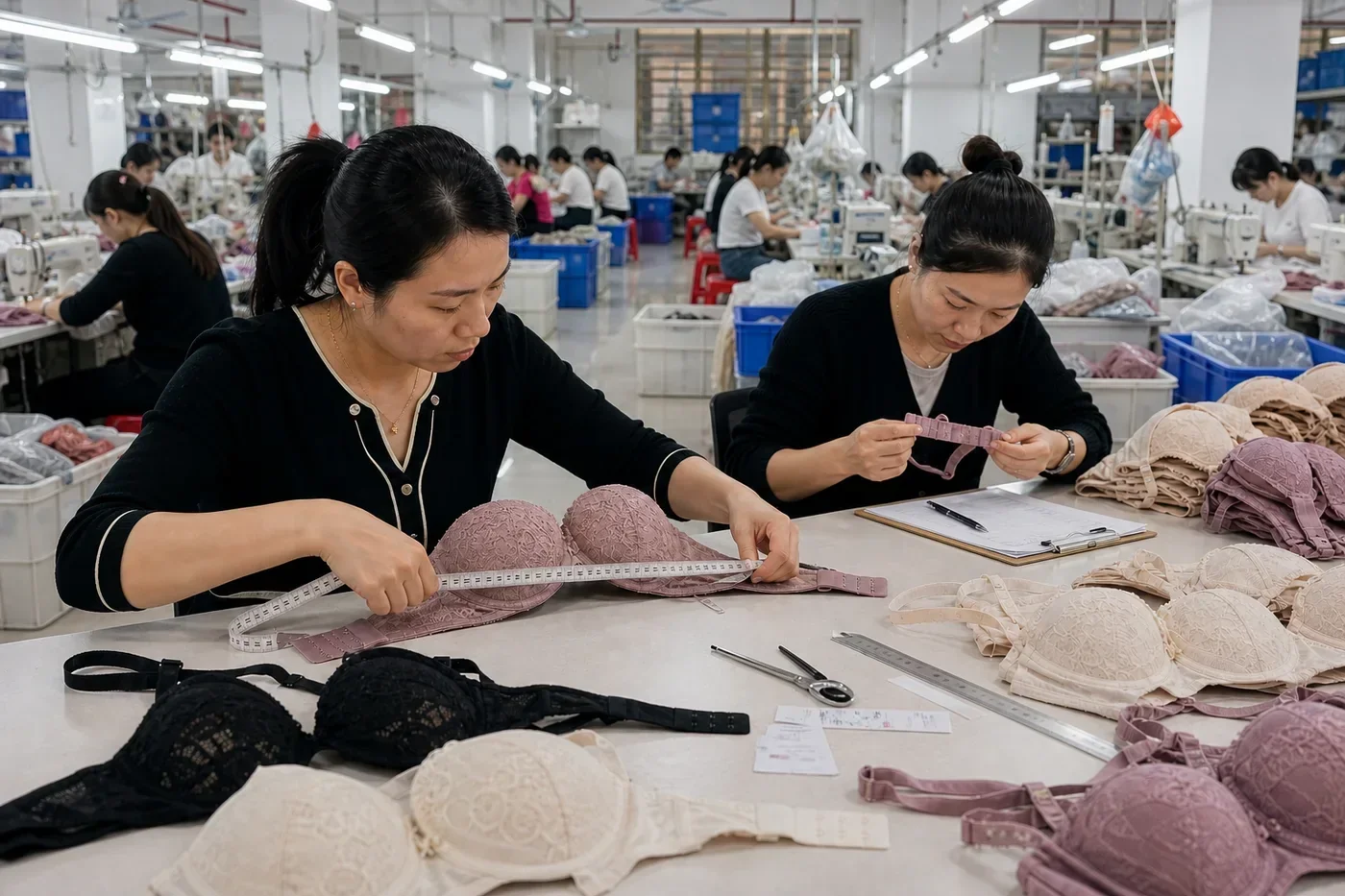
Every finished piece passes through final inspection before packing. This is a full check of appearance, function and measurements.
| Area | What We Check |
|---|---|
| Appearance | Colour, stains, loose threads, lace placement, label position |
| Construction | Seams, cup symmetry, underwire, strap attachment, hook strength |
| Fit and measurements | Underband length, cup height, strap width and length, size grading |
| Function | Stretch and recovery, hardware movement, hook and slider function |
| Cleanliness | No marks, dust, oil or thread residue |
Stage 4: Packing Inspection
Packing errors are expensive because they are discovered by the customer, not by the factory. A wrong label or a missing size in a carton can cause a chargeback even if the product itself is perfect.
Before a carton is sealed we check:
- Label, hang tag and care label match the approved artwork
- Size and colour match the carton label
- Quantity per polybag and per carton
- Polybag sealing and ventilation
- Carton weight and packing list
Loading photos are taken before dispatch, so the buyer can confirm what left the factory.
How Defects Are Classified
Not every defect has the same impact, so we classify them before deciding what to do:
- Critical defect: unsafe or unusable, such as a broken hook or exposed wire end. Never shipped.
- Major defect: affects sale or function, such as a misaligned cup, wrong size or failed strap. Repaired or rejected.
- Minor defect: cosmetic and does not affect function, such as a loose thread. Repaired where possible.
For larger orders, we can inspect against an agreed AQL level, so the acceptance standard is written down before production rather than negotiated after a problem appears.
How Buyers Can Verify Quality
You do not have to rely on the factory’s word. Practical steps:
- Approve a physical sample and keep it as the reference standard
- Ask for inspection reports with photos at each stage
- Request measurements from the bulk run, not only from the sample
- For large orders, book a third-party inspection before shipment
- Check a few pieces yourself after delivery, including after one wash
If a supplier resists these requests, that is a quality signal in itself.
Quality Control And Lead Time
Good QC does not have to slow production down. Because inspection is built into each stage, problems are corrected before they multiply. The cost of four inspection points is far lower than the cost of reworking a finished batch or replacing a shipment.
Our standard production time is 15 to 30 days after sample approval, and that estimate already includes the inspection stages described above.
Frequently Asked Questions
What does AQL mean in lingerie inspection?
AQL stands for Acceptable Quality Limit. It is a statistical sampling standard that defines how many defects are acceptable in a batch. Buyers and factories agree on the AQL level before production so the acceptance criteria are clear.
Do you offer third-party inspection?
Yes. Buyers are welcome to appoint a third-party inspection company before shipment, and we will arrange access to the finished goods and documentation.
What happens if a defect is found after delivery?
We review the inspection report and photos with the buyer, identify the cause and agree on repair, replacement or credit depending on the defect and quantity.
How many pieces do you inspect?
Every piece passes final inspection. For larger orders, we also use statistical sampling against the agreed AQL level for a documented acceptance decision.
If you need a supplier who can show you the inspection process rather than just describe it, contact our team or request a quote.