
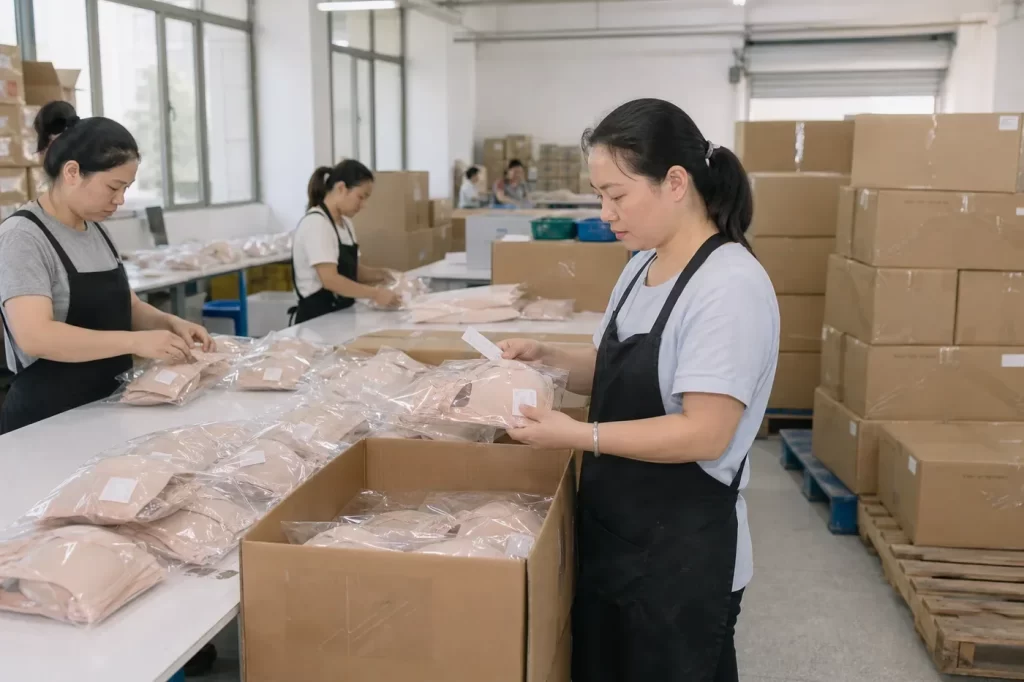
Two wholesale bras can be identical in fabric and construction, yet one feels like a cheap product and the other feels like a brand. The difference is usually custom bra packaging. For private label sellers, packaging is the cheapest part of the product to change and the fastest way to justify a higher retail price.
This guide covers the packaging options available from a lingerie manufacturer, what each one costs in time and complexity, and how to design packaging that survives shipping and looks good when it arrives.
Why Packaging Matters More In Lingerie
Lingerie is a personal purchase. Customers see the packaging before they see the fit, and many keep the box or bag after opening. Packaging also protects delicate lace, foam cups and straps that can be crushed in transit.
For wholesale buyers, good packaging has three practical benefits:
- Brand recognition — your logo, colours and design are visible at the moment of unboxing
- Higher perceived value — the same bra can sell at a higher price point
- Fewer returns — proper packing prevents creasing, snagging and strap damage
Packaging Options For Bra Brands
| Item | Purpose | Notes |
|---|---|---|
| Polybag | Basic protection and hygiene | Frosted or clear, with or without printing |
| Header card | Retail display and size information | Good for hangers and market stalls |
| Printed box | Premium unboxing experience | Higher cost, better protection |
| Insert card | Brand story, care instructions, marketing | Cheap to add, high perceived value |
| Hang tag | Price, size, barcode and branding | Required by many retailers |
| Care label | Compliance and washing instructions | Check destination market regulations |
| Sticker or seal | Branding and tamper evidence | Low cost, flexible for small runs |
| Tissue paper | Protection and premium feel | Printed tissue is a simple upgrade |
Materials And Printing
Most lingerie packaging uses one of four materials:
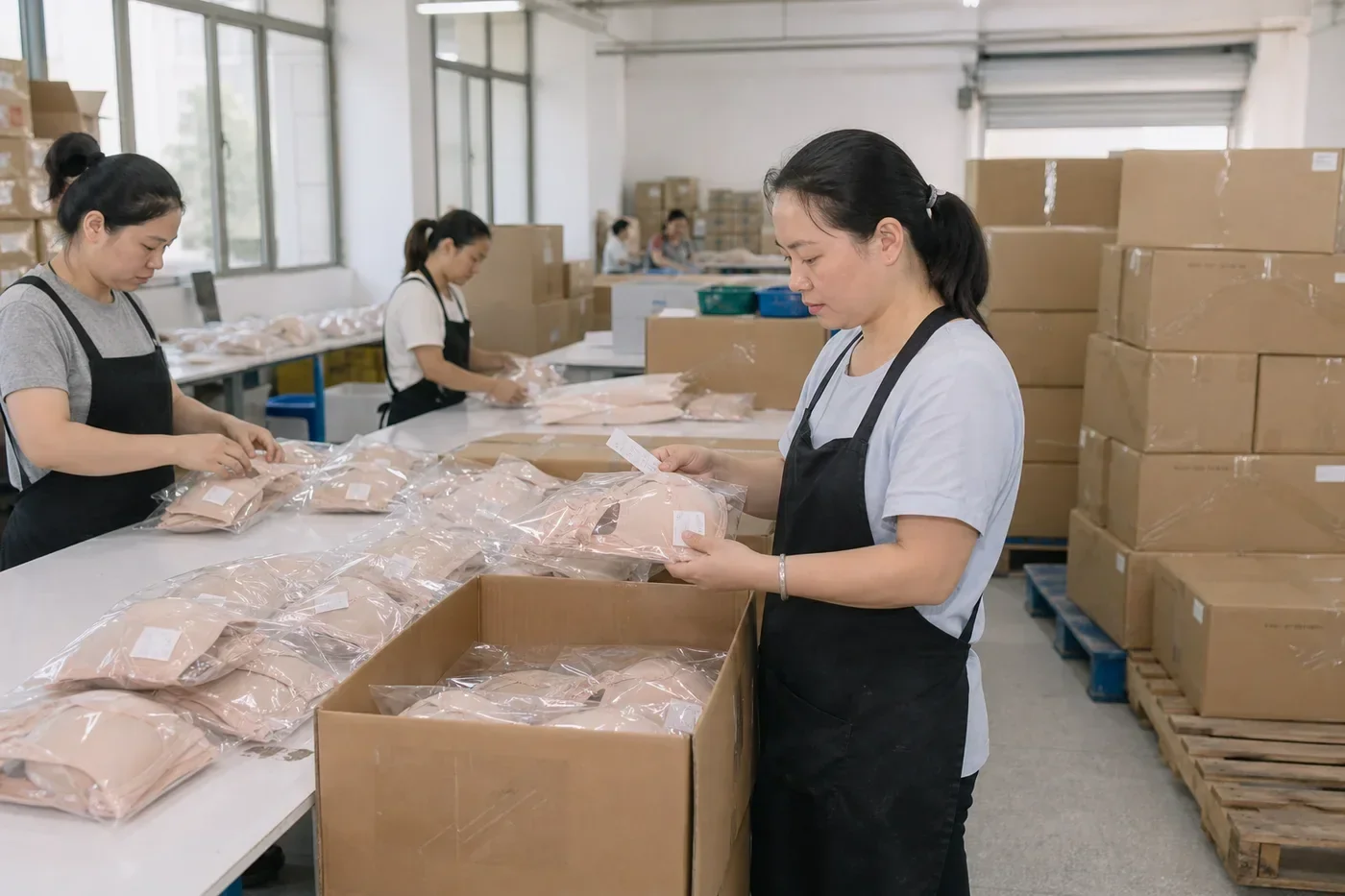
- PE or OPP polybags — cheap, waterproof and lightweight; best for everyday protection
- Kraft paper and corrugated board — recyclable, natural look, good for premium brands
- Coated paper and card — best print quality for boxes and hang tags
- Fabric bags — premium feel, higher cost, usually reserved for gift sets
Printing options range from a single-colour logo stamp to full-colour offset printing. For small runs, digital printing or stickers are more economical. For larger runs, offset printing gives better colour consistency and a lower unit cost.
How To Design Packaging That Works
Good packaging is not only about appearance. It has to survive shipping and be practical for your sales channel.
- Keep the logo simple and high contrast. Thin lines and small text disappear in print.
- Design for the box size you will actually ship. A beautiful box that gets crushed is not premium.
- Include size and care information where the customer will look for it.
- Check barcode and label requirements for your destination market.
- Test a sample before bulk printing. Colours on screen do not match printed colours.
- Think about storage. Flat-pack boxes save warehouse space; rigid boxes look better but take more room.
Costs And Minimum Quantities
Packaging cost depends on material, size, printing method and quantity. As a general rule:
- Stickers and printed polybags are the lowest-cost branded options
- Hang tags and insert cards are inexpensive and scale well
- Printed boxes cost more per unit but create the strongest brand impression
- Fabric bags and rigid boxes are premium items, best used for gift sets or higher-priced products
Minimum quantities are usually set by the printer, not the bra factory. Small runs are possible with digital printing, but the unit cost is higher.
Common Packaging Mistakes
- Printing a large quantity before approving a physical sample
- Using packaging that is too thin to protect foam cups
- Forgetting care labels and market-specific compliance text
- Choosing a box size that increases shipping volume and cost
- Designing packaging that cannot be reused or recycled without need
- Ordering packaging after production is finished, which delays shipment
Sustainable Packaging
Recycled kraft board, paper-based tape and plastic-free polybags are increasingly available and requested by buyers in Europe and North America. They usually cost slightly more, but they support a sustainability claim that customers can verify.
If you plan to market your packaging as eco-friendly, ask the supplier for material certificates and avoid mixed materials that cannot be separated for recycling.
Frequently Asked Questions
Can I order custom packaging with a small bra order?
Yes, but the packaging minimum is usually set by the printer. Stickers, printed polybags and insert cards work well for small runs. Printed boxes become more economical at higher quantities.
Do you supply labels and hang tags as well as packaging?
Yes. We can produce woven labels, care labels, hang tags, polybags, boxes and insert cards with your branding, and check them against your approved artwork before packing.
How long does custom packaging take?
Simple printed items such as stickers and hang tags usually take a few days. Printed boxes and custom bags take longer, so packaging should be planned at the same time as production, not after it.
Can packaging reduce shipping costs?
Yes. Flat-pack and lightweight packaging reduces volume and weight. A smaller box can lower shipping cost per unit, especially for air freight.
If you want your logo on the product and the packaging, we can quote labels, hang tags, polybags and boxes together with your bra order. Request a quote or see our OEM and ODM options.