
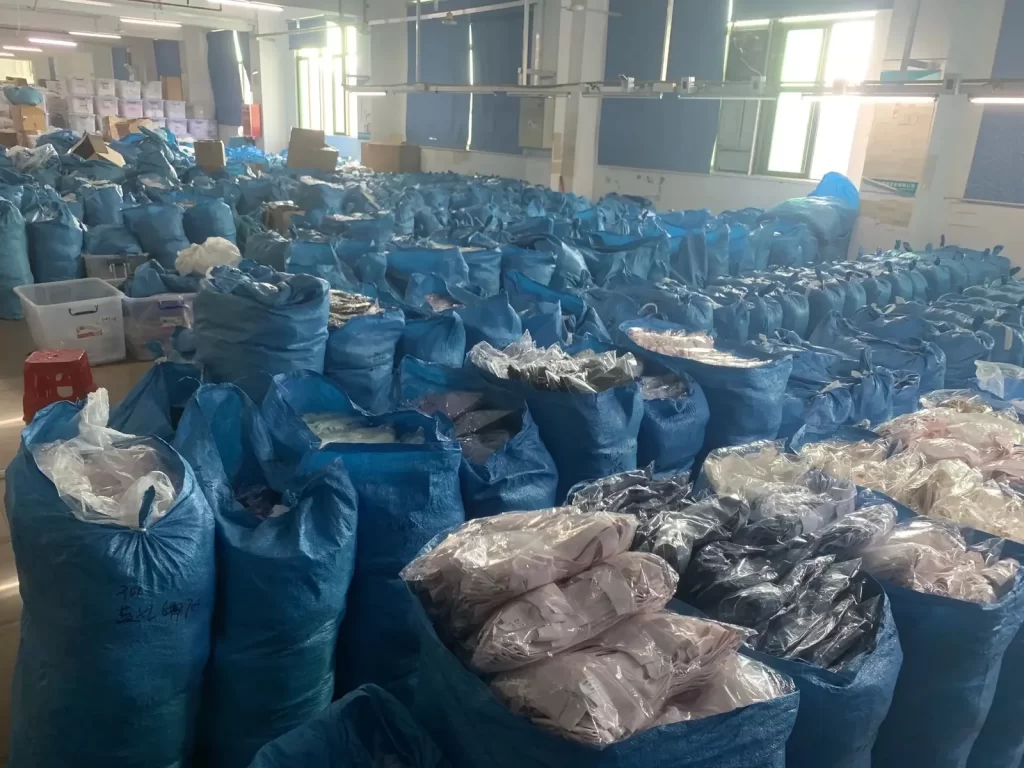
Buying wholesale bras in bulk is not only about a lower price per piece. The bigger advantage is control: control over quality, colour, size range, packaging and delivery schedule. For a shop or online seller, those factors decide whether a style sells out or sits in the stockroom.
This article explains the real benefits of bulk buying, the point where bulk stops making sense, and how to start without overcommitting your cash.
1. Lower Unit Cost
Bra pricing is driven by setup work as much as by material. Cutting, pattern grading, sample making, line setup and packaging printing all cost roughly the same whether you produce 100 pieces or 1,000. That is why the unit price drops as quantity rises.
A typical price structure looks like this:
| Order Type | Typical Quantity | Cost Structure |
|---|---|---|
| Stock trial order | 3 to 50 pieces | Standard wholesale price, no setup cost |
| Small bulk | 100 to 300 pieces | Lower unit price, custom label options |
| Production run | 500 to 3,000 pieces | Best unit price, custom fabric and colours |
The exact saving depends on the style, but the principle is consistent: the more of the setup cost each piece carries, the higher your unit price.
2. Consistent Quality And Size Grading
When you buy one or two pieces at a time from different sources, you get different fabrics, different sizing and different construction, even when the product looks the same online. Bulk ordering from one manufacturer keeps the whole batch consistent.
This matters most in sizing. A bra that fits true to size in the sample but runs small in production creates returns. Factories that produce a full bulk order can grade patterns properly and check measurements across the whole run, not just on one sample.
3. Customization At Scale
Many customization options only become practical at bulk quantities:
- Custom fabric colours with lab dips
- Custom lace patterns
- Woven labels, care labels and hang tags
- Printed polybags, boxes and insert cards
- Custom size ranges and cup sizes
At three pieces, a factory can only sell you what already exists. At 300 pieces, you can build a product that carries your brand rather than a generic wholesale item.

4. Better Colour And Size Availability
Stock availability is one of the hidden costs of small orders. If your best-selling colour is out of stock at the supplier, you lose sales even if another colour is available. Bulk buyers plan ahead and reserve production capacity for their colours and sizes.
For seasonal ranges, ordering early also means the factory can dye fabric and produce trim in the exact shades you need, instead of substituting a close colour.
5. Reliable Restocking
A bulk order is not only about the first shipment. It establishes a production record: approved sample, approved fabric, approved measurements, approved packaging. When you reorder, the factory repeats the same specification rather than starting from zero.
That is why repeat orders are usually faster and more consistent than first orders. The setup work is already done.
6. Shipping Consolidation
Shipping small orders individually is expensive because every shipment carries fixed costs: export handling, airway bill, customs documentation and last-mile delivery. Consolidating a bulk order into one shipment reduces the cost per piece, especially for air and sea freight.
For wholesale buyers, a single consolidated shipment also means one customs entry, one delivery and one set of documents to manage.
7. Priority Production
Factories schedule capacity in advance. Buyers who place regular bulk orders usually get priority when capacity is tight, because the order is large enough to plan a full line around. Small buyers are often fitted into gaps.
If your business depends on seasonal launches, this is a practical advantage that does not appear on the price list.
When Bulk Buying Does Not Make Sense
Bulk is not always the right answer. It does not make sense when:
- You are testing a new style and have no sales data yet
- Your storage space is limited
- Your working capital is tied up in other stock
- The style is trend-led and may look dated within a season
- You sell in very small volumes or only made-to-order
This is why stock styles with a 3-piece minimum exist. Test first, then buy bulk once a style proves itself.
How Much Should You Order First?
A practical approach for a shop or online seller:
- Order 3 to 20 pieces of several stock styles to test demand
- Identify the two or three styles that sell fastest
- Reorder those styles in 100 to 300 pieces with your own label
- Once a style sells consistently, move to 500 pieces or more and negotiate the best price
This sequence protects your cash while still moving you toward bulk pricing.
Frequently Asked Questions
What is the minimum order for wholesale bras?
For stock styles, many Chinese suppliers accept 3 to 50 pieces. For custom production, 100 to 300 pieces per style per colour is common.
How much cheaper are bras when bought in bulk?
The saving depends on style, fabric and quantity, but larger orders spread the setup cost across more pieces. A 500-piece order is usually significantly cheaper per piece than a 100-piece order of the same style.
Can I mix sizes and colours in one bulk order?
Yes. Most factories allow a size and colour assortment within the minimum quantity per style. Ask for the exact breakdown rules before ordering.
Do you offer stock styles for small trial orders?
Yes. Our stock styles start from 3 pieces, so you can test a style before committing to a bulk production run.
If you want to compare bulk pricing for your best-selling styles, send us the style numbers and quantities. Request a wholesale quote and we will reply within 24 hours.